FG-3+
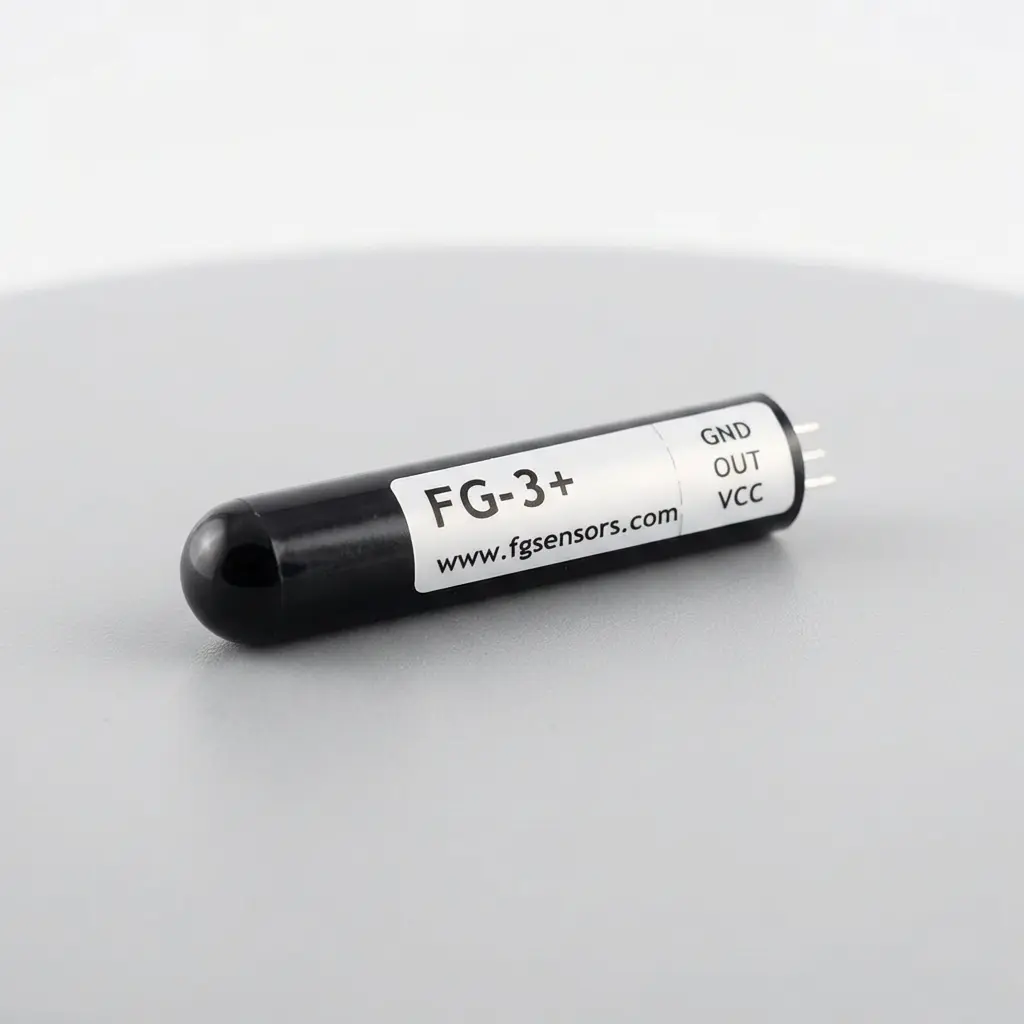
The FG-3+ is a high-sensitivity 1-axis fluxgate magnetometer designed for measuring weak magnetic fields with very high precision.
The sensor outputs a 5 V rectangular pulse signal whose period is proportional to the magnetic field strength along the sensor axis, allowing direct measurement using frequency or period counting.
FG-3+ sensors are commonly used in magnetometer systems, gradiometers, and scientific instruments where stable measurement of the Earth's magnetic field is required.
Key Features
- 1-axis fluxgate magnetometer
- High intrinsic magnetic sensitivity
- 5 V rectangular pulse output proportional to magnetic field
- Frequency output easily readable by microcontrollers
- Compact and lightweight design
- Compatible replacement for Speake & Co. FGM-1 and FGM-3 sensors
The FG-3+ provides over 1000× higher sensitivity than typical integrated magnetometer ICs, making it suitable for precision geomagnetic measurements.
Operating Principle
The FG-3+ uses fluxgate magnetometer technology to detect magnetic fields.
The sensor produces a square-wave output signal whose period varies with the magnetic field strength along its measurement axis. The magnetic field can be calculated by measuring the signal period or frequency.
Typical measurement method:
- Measure the period or frequency of the output signal
- Convert the measured value to magnetic field units (nT, µT, or Gauss)
The relation between signal period and magnetic field is approximately linear across the operating range.
Electrical Specifications
| Parameter | Value |
|---|---|
| Sensor Type | 1-Axis Fluxgate Magnetometer |
| Operating Range | ±50 µT |
| Supply Voltage | 5 V (recommended) |
| Maximum Supply Voltage | 7 V |
| Typical Supply Current | ~12 mA |
| Operating Temperature | 0 °C – 50 °C |
| Bandwidth | DC – 20 kHz |
| Output Type | Frequency / square wave |
Output Signal
The FG-3+ provides a 5 V rectangular pulse output.
Typical output frequency range:
| Magnetic Field | Frequency |
|---|---|
| +50 µT | ~120 kHz |
| −50 µT | ~50 kHz |
Equivalent signal period range:
| Period |
|---|
| ~8.5 µs to ~25 µs |
The signal frequency changes proportionally with magnetic field strength.
This frequency-based output provides:
- strong noise immunity
- easy digital measurement
- reliable transmission over long cables
Integration
The FG-3+ sensor can be integrated with many systems including:
- microcontrollers (Arduino, STM32, etc.)
- frequency counters
- data acquisition systems
- custom magnetometer electronics
- FG Sensors converter boards and MAG-BOARD
The output frequency can be measured directly using timer capture or frequency counting techniques.
Gradiometer Systems
Two FG-3+ sensors can be combined to create a gradiometer.
A gradiometer measures the difference between two magnetic field sensors, which helps suppress background geomagnetic noise and highlight local anomalies.
Typical uses:
- metal detection
- archaeological surveying
- underground infrastructure detection
- geophysical exploration
Typical Applications
Geophysics and Space Weather
- precise Earth magnetic field measurements
- aurora monitoring
- solar storm detection
- space weather observatories
Archaeology and Geological Surveys
- metal detection systems
- archaeological artifact detection
- buried object detection
Security and Safety
- weapon detection systems
- unexploded ordnance detection
Transportation and Logistics
- vehicle detection
- traffic monitoring
- ship detection sensors
Industrial Applications
- magnetic material measurements
- ferrous impurity detection
- movement and proximity sensing
Related Products
- Paired FG-3+ Sensors — matched sensors for gradiometer systems
- Converter Circuit Board — frequency-to-voltage conversion
- MAG-BOARD — magnetometer signal processing electronics
- DIY Gradiometer Kit — complete magnetometer system using FG-3+ sensors
Next Steps
- Learn about Paired FG-3+ Sensors for gradiometer configurations.
- See FG-3C for a calibrated digital fluxgate sensor.
- Explore the DIY Gradiometer Kit for a complete measurement system.